

Gadget Audit verdict
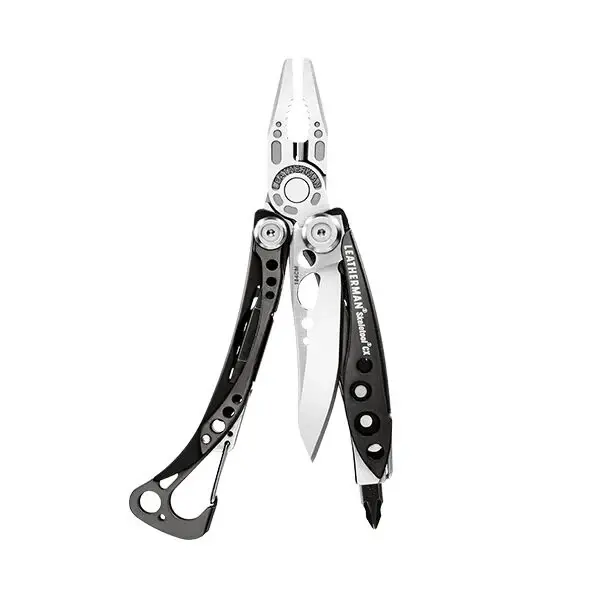
The Skeletool CX is the stronger anchor when one tool must cover cutting and small repairs. Add a keychain light only if your phone flashlight regularly fails the job.
Reasons to choose
- A simple system stops duplicate tools
- Both picks are compact
Reasons to pause
- Minimal tools sacrifice breadth
- Key shapes and local carry laws still matter
- No direct sample has been received
EDC gets heavy when every possible problem earns a separate tool. A better kit starts with jobs, not products: cut, tighten, illuminate. If one tool covers two of those jobs without becoming a brick, it earns the pocket.
This product review compares the roles of KeySmart and the Leatherman Skeletool CX. It does not claim bench measurements. Dimensions and material claims should be checked against the official listing before purchase.
How we reviewed these picks
Sample provenance: Gadget Audit did not purchase the products, use them hands-on, or perform lab testing for this article. We reviewed official product information and official video, separated published claims from measurements, and left unknowns visible. Any direct testing update will identify the sample, test equipment, conditions and raw results.
Comparison table
| Product / criterion | Published claim | Bench result | Best use |
|---|---|---|---|
| KeySmart | Organizes compatible keys | Not yet bench-measured | Reducing key bulk and noise |
| Leatherman Skeletool CX | Knife, pliers and selected essentials | Not yet bench-measured | One compact repair tool |
Values marked as claims come from the product or campaign material already documented in Gadget Audit’s existing coverage. Empty bench fields are deliberate.
Give every item a job
“Just in case” is how pockets become drawers. Write down the tasks you actually faced last month. A key organizer solves carry friction; a focused multitool solves small fixes; a light solves visibility.
Prefer overlap that saves weight
A multitool is useful when its overlap replaces separate items. It is wasteful when the pliers, driver and blade are worse than tools you already carry and you keep both.
Audit the kit every month
If an item never leaves the pocket but also never gets used, move it to the bag. The best EDC loadout is allowed to change with work, travel and season.
Official product videos
Official manufacturer footage loads only when selected.
Seasonal and travel rotations
The three-tool rule describes the daily kit, not every kit. Winter coats swallow what summer shorts cannot, and a travel day has different jobs than a workday. Keep a small “second string” — the bulkier items, the travel adapter, the larger light — in a bag or drawer rather than forcing them into daily pockets. The everyday carry stays minimal precisely because the situational kit exists elsewhere.
Travel is the main rotation trigger. Flying changes the rules entirely: blades that are legal at home may not fly, even in checked baggage rules vary, and some countries restrict tools you carry casually at home. Before a trip, rebuild the kit from the destination’s rules rather than trimming the home kit — it is faster and safer.
Work dictates the second rotation. An office day might drop the repair tool for a smaller precision driver; a field day might add the full-size multitool and leave the key organizer behind. The audit habit from the main guide applies here too: when the context changes, re-ask which three jobs matter, and let the tools follow.
What never rotates is the principle: every item has a job, every job is real, and anything unused for a month moves to the second string. A rotation system only works if the audit is honest — otherwise “seasonal” becomes an excuse for a drawer of unused gear.
Flaws, but not deal-breakers
The Skeletool’s focused tool set omits functions found on larger multitools, while KeySmart compatibility depends on key shape. A lighter kit is intentionally less comprehensive.
Also considered—or cut before testing
A sensible third tool when a real keychain light solves a frequent problem.
Cut from this lighter system because capability comes with noticeable pocket weight.
Frequently asked questions
How many EDC tools should I carry?
There is no universal number. Start with three jobs—cutting, small repair and light—and remove anything that does not solve a recurring need.
Is a multitool better than separate tools?
Only when compactness matters more than specialization. Dedicated tools usually perform better; a multitool wins on availability.
Was this guide direct tested?
No sample is marked as received. This is a product review and the comparison table keeps bench measurements blank.
Does the three-tool rule work for office workers?
Yes — arguably best. Office carry is about small, frequent annoyances: packages, loose screws, dark server rooms, dead phones. A compact multitool, a keychain light and an organizer cover nearly all of it without alarming coworkers or bulging dress-code pockets.
Does my phone count as one of the three tools?
No, and that is deliberate. The phone is infrastructure you carry regardless — counting it would let the kit bloat while technically obeying the rule. The three tools are the dedicated physical objects beyond the phone: cut, repair, illuminate.
How do I stop the kit from growing again?
Keep the one-in, one-out rule: anything new has to displace something old, and the monthly audit is non-negotiable. Photograph the kit when it feels perfect — that photo becomes the reference the next time “just one more tool” starts sounding reasonable. Most kit creep happens gradually enough that you never notice until your pockets complain.
Open discussion
No account or membership is required. Because this edition is a static publication, reader notes are handled openly by email until persistent on-page comments are available.
Send a reader note →